

Master the basics of Ringlock scaffolding. Learn about its 20-ton load capacity, 80% faster assembly, key components, and steps to build this industry standard.
Introduction
Did you know that a vertical “standard” in a high-end Ringlock system can handle a load up to 20 tons, depending upon the grade and bracing. It means that a straight pole of a ringlock scaffolding roughly the width of a soda can can handle the weight of 3 African elephants or 10 medium SUVs.
This article is all about ringlock scaffolding. We will explain the basics of ringlock scaffold and the technology that makes it unique, key components required to erect a scaffolding structure, why it’s becoming popular, and steps to assemble it, with mention of its applications.
1. Understanding The Basics of Ringlock Scaffold
Ringlock scaffolding is a prefabricated, easy-to-assemble and disassemble modular system that works like a kit. The traditional “tube and clamp” style scaffold takes time to set up. A worker has to clamp together pipe sections manually by tightening bolts using tools. The chances of overtightening and undertightening are high, which can cause damage or pose a risk, respectively.
How the Technology Works
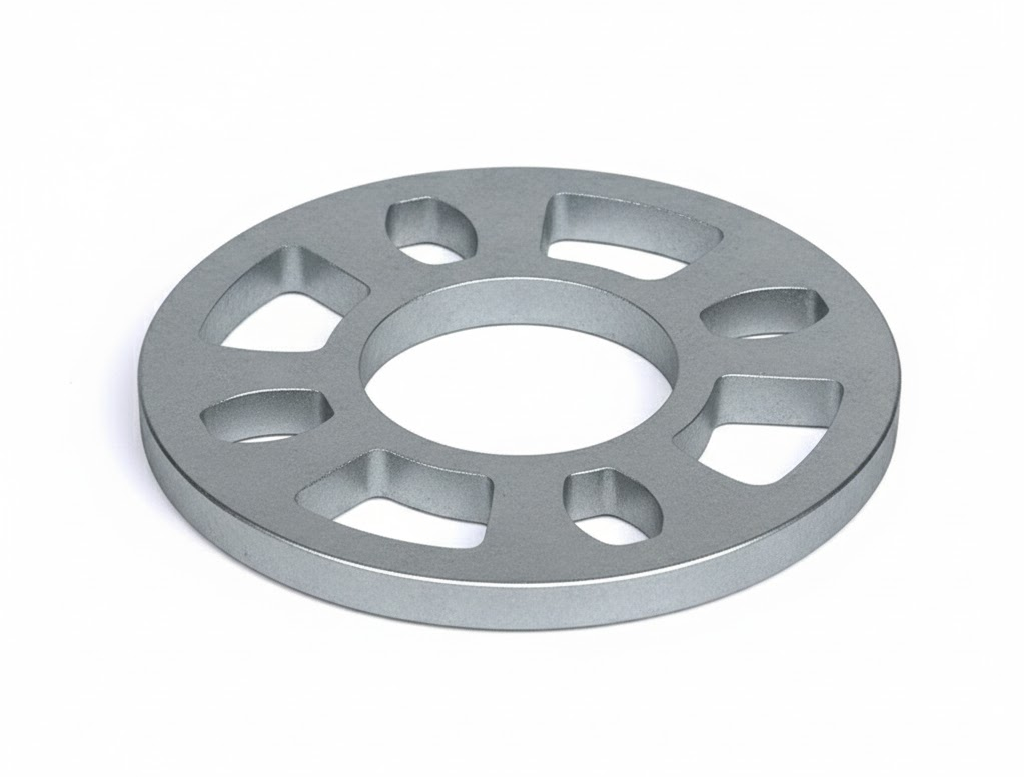
The key feature that makes the ringlock scaffold so convenient is the rosette connector. These are plate-like structures that are welded around the vertical poles. It consists of mechanisms that allow other parts, like the diagonal or horizontal, to attach and form a structure that is firm and becomes more stable under load.
Primary Use and Durability
Ringlock scaffolds are ideal for heavy-duty work, like in refineries and power plants, where convenience with quick setup is key to reducing downtime in maintenance activities. Their inherently safe design makes it easy to manage scaffold jobs for industrial safety personnel, as there is less chance of bolts loosening or falling off, like in traditional scaffolds. The material is coated with zinc, often using a hot-dip galvanization process to ensure it remains corrosion-free.
2. What Is Ringlock Technology In Scaffolding?
The Rosette and Connection Mechanics
-
8-Point Entry: The name ringlock is associated with the rosette connector, which is the central idea of design in this scaffolding. Rosette connectors have eight slots around the circular disc structure that welds to the vertical poles. Installers can attach horizontal bars and diagonal braces at a 45-degree increment. The flexibility in angle allows a higher level of precision.
-
The Wedge Pin: To lock in other parts to the rosette, simply insert the wedge pin into the hole and hammer it. The simple action results in a high-load-bearing scaffolding setup.
Structural and Efficiency Benefits
The ringlock scaffolding is designed so that the whole weight is shifted towards the bottom. Its self-locking mechanism makes the whole structure stable and capable of handling heavy weights. Moreover, the use of prefabricated parts and simple fastening makes setting up these scaffolds quicker and requires lower labor on-site. The 45-degree slots on the rosette allow scaffolding construction in curved or irregular shapes.
Safety and Specialized Environments
One of the unique features of Ringlock technology is a robot-friendly design. Due to limited slots and fixed angles, robots can set up this scaffolding without faults. The simple lock mechanism keeps the structure steady and firm, allowing its use around high-vibration equipment.
Note: The zinc-aluminum alloy coating of ringlock parts and galvanized alloy allows its use in underwater applications.
3. Key Components Required For Erecting Ringlock Scaffolding
The Structure
-
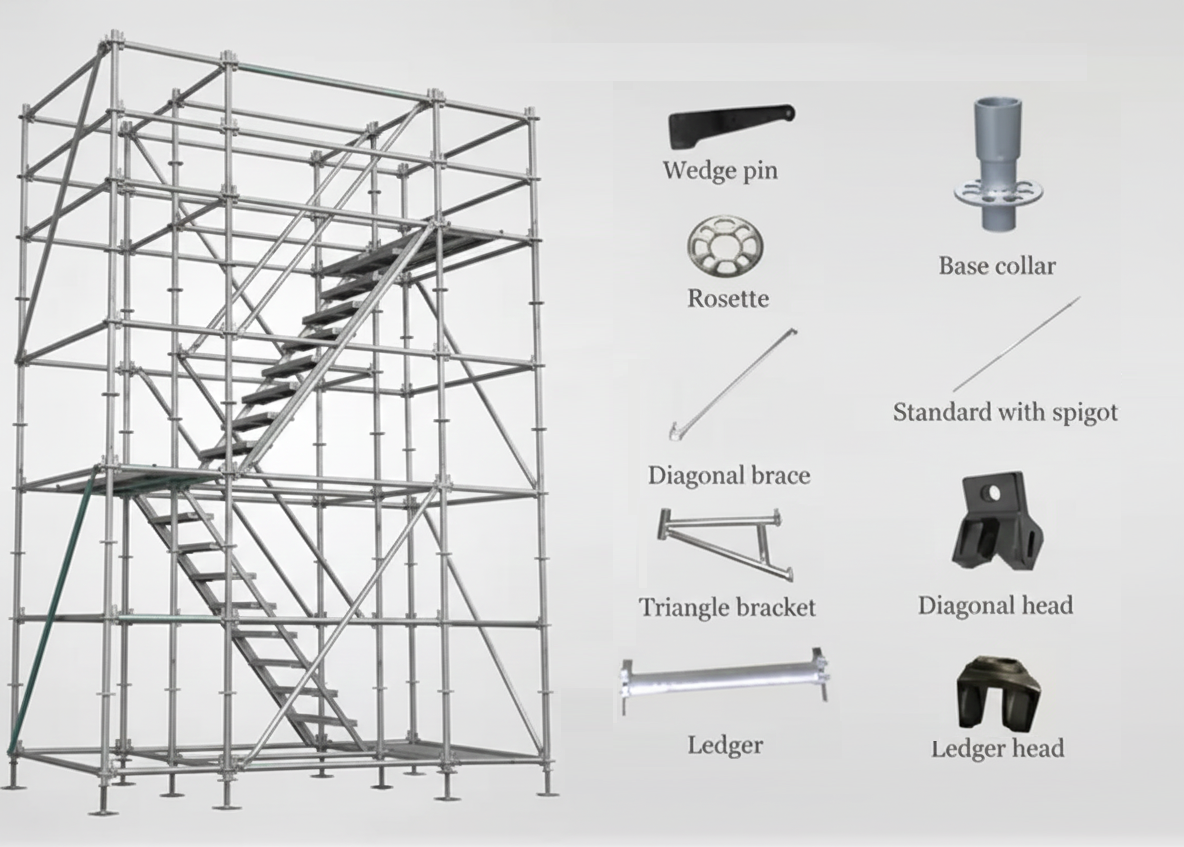
Vertical Standards: These are the core components of a ringlock scaffolding that take all the load. They are erected upright with rosettes welded to them every 0.5m.
-
Horizontal Ledgers: The vertical standards are connected together using these horizontal ledgers, or simply ledgers. They come in various lengths from 0.73m for tight spaces to 3.07m for long runs. It defines the size of each “bay,” which is the formation of four vertical standards.
-
Diagonal Braces: These form the truss structure required for the stability of the scaffolding. These are simple triangles that distribute the forces evenly. They have specialized ends with hooks that go into the larger slots of the rosette.
Ground Support and Work Surface
-
Base Jacks or Collars: All construction sites may require adjustment of the feet to accommodate the uneven surface. These keep the structure straight through 0.3 to 0.6m of height adjustment.
-
Steel Planks or Decks: These are floors that fix onto the rosette using a wedge pin, supporting up to 75lbs per square foot.
-
Truss Ledgers and Lattice Girders: For heavy-duty work, truss ledgers that are reinforced double the platform capacity.
Safety and Access
-
Guardrails and Toeboards: Guardrails are barriers set at 1m height to provide fall protection, and toeboards are just at the very edge to prevent tools from falling off.
-
Integrated Stair Units: These are built-in stair structures that make it convenient to carry a load.
4. Why Ringlock Modular Systems Is Becoming The Industry Standard
Versatility & Complexity
In comparison to other technologies like Cuplock or Kwikstage, ringlock scaffolding can form contours or circular structures. The rosette allows connections with a 40-degree increment in comparison to others that restrict setting up the scaffold at a 90-degree increment. The simple design of the rosette makes it more suitable for round structures like storage tanks or stadium seating.
Industry-Leading Safety & Load Bearing
The design of the ringlock modular system is to enable a single connector to bear over 7,000 lbs of load. The structure can be set up as long as 200+ft high. Despite its height, the design meets the strict international safety standards like OSHA, EN 12810/12811 (Europe), ANSI (North America), and AS/NZS 1576 (Australia/New Zealand). The key feature that makes it extremely safe is the ability of the wedge to tighten further upon vibrations. All its features make the ringlock scaffolding ready for dynamic conditions.
Economic and Environmental Impact
-
Tool-Free Setup: The end parts of horizontal ledgers and other components have wedges that go into the holes on the rosette. Hammering them down is all you need. The pre-fabricated nature of ringlock modular systems reduces margin for error and speeds up setup/dismantling time.
-
Longevity: All the components are hot-dipped galvanized with 85 microns of zinc coating to ensure a long life of 10-15 years.
-
Sustainability: It’s 100% recyclable and highly reusable.
Data Sheet: Ringlock at a Glance
| Features | Specifications |
| Material | High-strength S355 galvanized steel |
| Load Capacity | 7,000+ lbs per connector / 75 lbs per sq ft |
| Max Height | Configurable up to 200+ feet |
| Coating | Hot-dip galvanized (min. 85 microns zinc) |
| Slopes | Tolerates pitch up to 4:12 |
5. Steps Of Ringlock Scaffold Standards Assembly
Step 1: Site Preparation
Before starting to set up the ringlock scaffold, ensure that the ground is level, stable, and cleared of debris. Check if you require any local permits for work. For an uneven surface, prepare the base jacks to handle height adjustments.
Step 2: Install Base Jacks and Collars
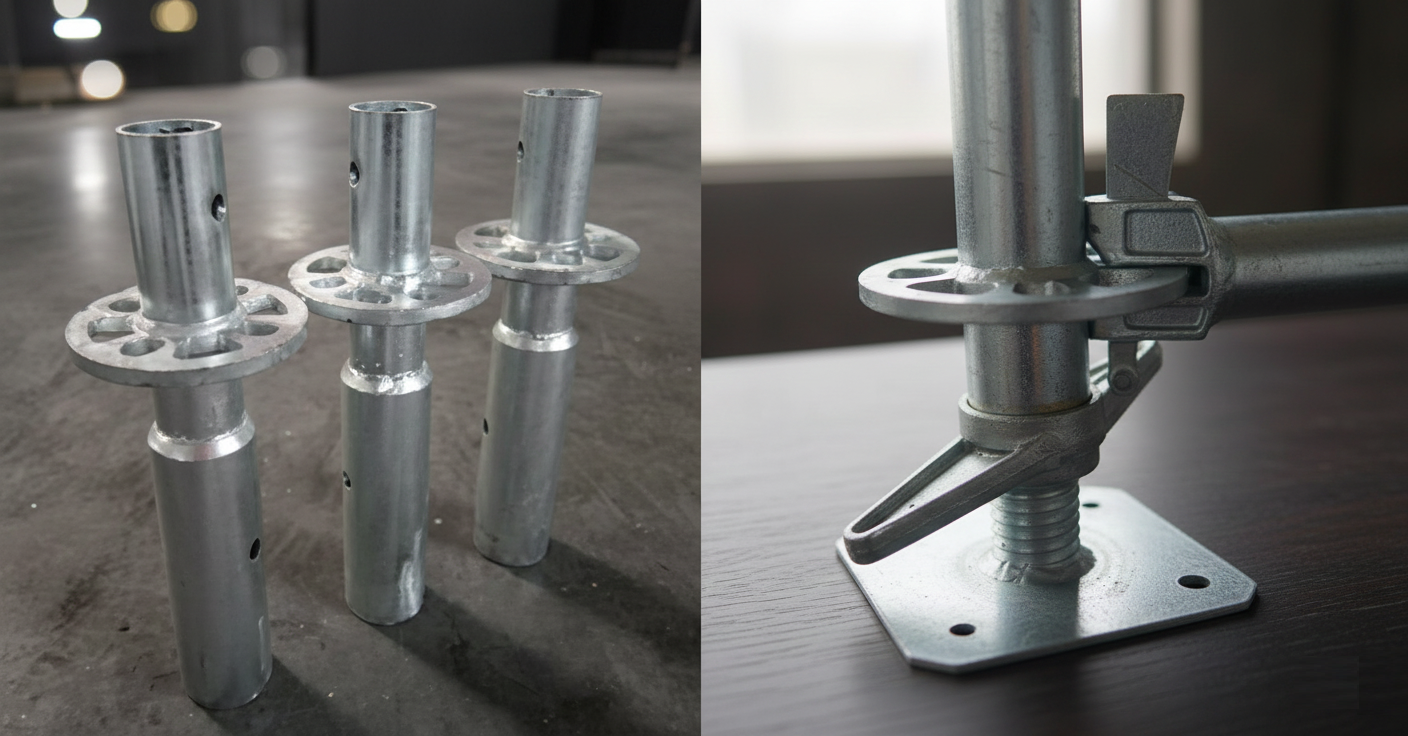
Depending on the design you are targeting, set up the base jacks. Slide the base collar onto the jacks. These collars take the first rosette to a height of approximately 200mm above the ground, setting up the starting point for the build.
Step 3: Erect Initial Vertical Standards and Base Frame
Now that you have the base, insert the vertical standards into the collars. Connect them using the horizontal ledgers to form a square base frame that will act as the foundation. Use laser levelling tools to ensure precise leveling and avoid “plumb errors” or simple turns non-verticality of the assembly. Insert the wedges into the lower rosette and hammer.
Step 4: Add Horizontal Ledgers and Platforms
After the base is set under the next set of ledgers, which are typically at 2m height, typically, hammer the wedges to secure them in place and install the self-locking steel planks or decks. It will provide firm ground for the installer to stand on and work on the next level.
Step 5: Install Diagonal Braces
To prevent the tower of scaffolding from swaying, install the diagonal braces across the bay. It will form a triangle, which will make the structure much firmer. Always keep the structure plumb and square.
Step 6: Build Higher Levels
Insert the additional standards for the next level. Use the integrated coupling pin to lock into place. Repeat the previous steps of adding the ledger and braces.
Step 7: Add Safety Features
After you reach the working floor, install the guardrails and toeboards. These are crucial for the safety of the worker on the floor and those who are working below at the site.
Step 8: Final Inspection and Tagging
Before finalizing the assembly, perform the final inspection to ensure all safety precautions are met. It will help avoid the stoppage of work later during the Industrial Safety review.
-
Check Connections
-
Apply Physical Force for Stability Test
-
Tag the Scaffolding After Inspection for Safe Use
6. Key Use Cases For Ringlock Scaffolding
6.1 Construction & Civil Infrastructure
-
High-Rise Buildings
-
Bridge Engineering
-
Tunnels & Subways
-
Dams & Reservoirs
-
Silos & Water Towers
6.2 Industrial & Energy
-
Oil & Gas Refineries
-
Power Plants
-
Offshore Platforms
-
Chemical Plants
-
Wind Turbines
6.3 Marine & Transportation
-
Shipbuilding
-
Aviation
-
Railways
6.4 Events & Entertainment
-
Concert Stages
-
Grandstands
-
Public Access
-
Broadcasting
6.5 Specialized Maintenance & Restoration
-
Historic Buildings
-
Chimneys & Steeples
-
Theme Parks
-
Demolition
Conclusion
Ringlock scaffolding is ideal for all construction, maintenance, or installation activities that require labor to reach higher elevations. They need a lower amount of labor and tools for their assembly. The structure offers higher-level stability by further tightening in conditions of vibration or movement. These features are making these types of scaffolding the industrial standard.